


Custom vs. Standard HPUs: Which Hydraulic Power Unit Fits Your Budget?
Release time: 2026-02-24
Table of Contents
Choosing the right Hydraulic Power Unit (HPU) is a critical decision for many industrial and construction projects. Whether you are powering hydraulic submersible pumps, drainage robots, or hydraulic tools, the HPU directly affects system performance, operating costs, and long-term reliability. One of the most common questions buyers face is whether to choose a standard HPU or invest in a custom-built hydraulic power unit. The answer largely depends on your budget, application, and operational priorities.
Understanding Standard Hydraulic Power Units
Standard HPUs are pre-designed systems built with common configurations. They are typically available in fixed power ranges, pressure ratings, and tank capacities. Because they are mass-produced, standard HPUs usually come at a lower upfront cost and shorter delivery time.
For many users, standard HPUs are a practical choice. If your application has clear requirements and operates under normal conditions, a standard unit can deliver reliable performance without unnecessary complexity. Maintenance is also straightforward, as replacement parts are widely available and technicians are familiar with the design.
However, standard HPUs may come with limitations. If your system requires specific flow control, unique mounting dimensions, or operation in extreme environments, compromises may be necessary.
What Makes a Custom HPU Different?
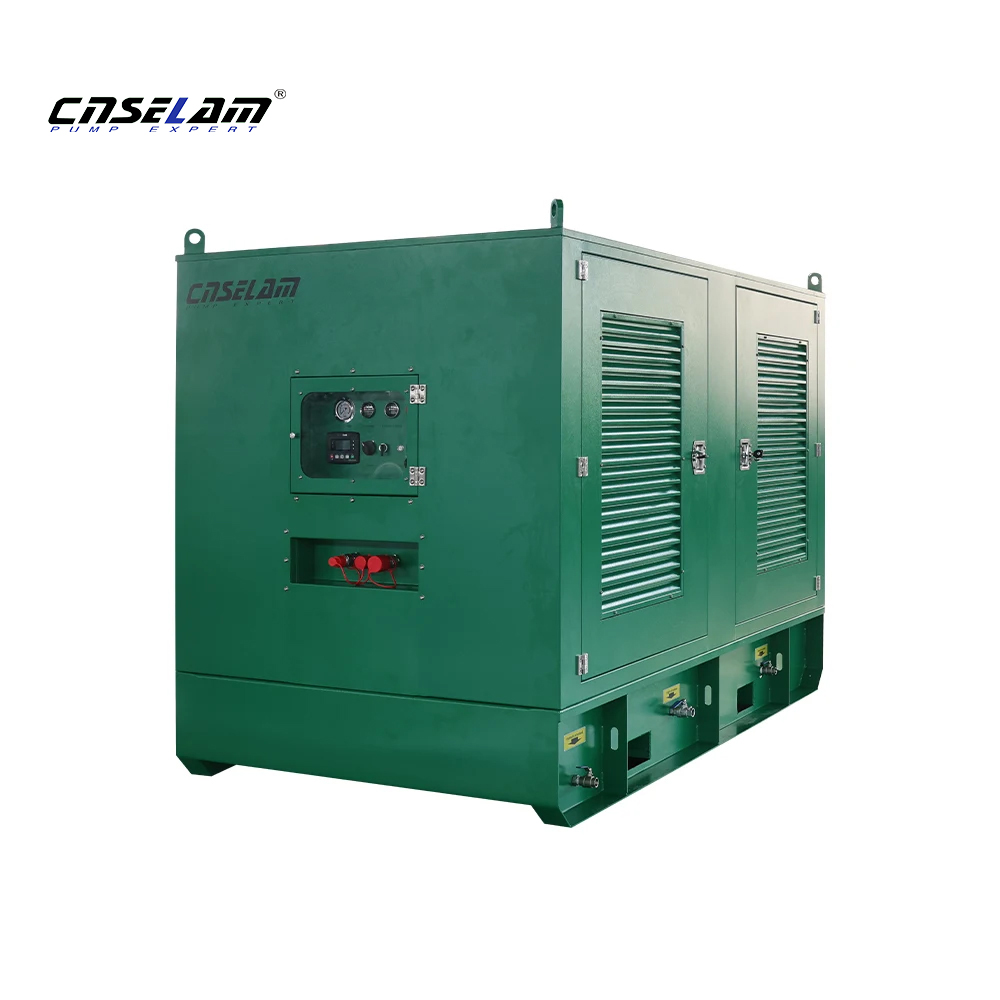
Custom hydraulic power units are designed around your exact operating conditions. This includes pressure, flow rate, duty cycle, ambient temperature, noise level, and integration with other hydraulic equipment. While the initial investment is higher, a custom HPU can optimize performance and reduce long-term operating costs.
For example, a custom-built unit can be engineered to deliver precise hydraulic output, minimizing energy loss and improving efficiency. It can also include specialized components such as enhanced cooling systems, advanced filtration, or compact layouts for space-restricted sites.
In demanding applications—such as continuous-duty pumping, offshore projects, or abrasive environments—a custom HPU often provides better durability and system stability over time.
Budget Considerations: Short-Term vs. Long-Term Cost
When comparing custom and standard HPUs, budget should be viewed beyond the purchase price. A standard HPU usually wins on initial cost, making it attractive for short-term projects or cost-sensitive operations.
However, if a standard unit operates outside its optimal range, it may consume more energy, wear out faster, or require frequent maintenance. In these cases, a custom HPU may offer a better return on investment by reducing downtime and operating expenses over its service life.
The key is matching the HPU to the real demands of your application—not just the budget line item.
Flexibility and Scalability
Another important factor is future scalability. Standard HPUs offer limited flexibility if system requirements change. Custom HPUs, on the other hand, can be designed with expansion in mind, allowing for upgrades or additional hydraulic circuits later.
For growing operations, this flexibility can be a significant advantage.
Making the Right Choice
There is no one-size-fits-all answer. Standard HPUs are ideal for proven, stable applications with predictable loads. Custom HPUs are better suited for complex, high-demand, or specialized projects where performance and reliability are critical.
Selam is a manufacturing company mainly engaged in hydraulic power units, hydraulic submersible pumps, hydraulic drainage robots, and hydraulic tools. With experience across a wide range of applications, Selam supports both standard and customized HPU solutions to help users balance cost and performance effectively.
FAQ
Q1: Is a custom HPU always more expensive than a standard one?
A: The upfront cost is usually higher, but custom HPUs can reduce long-term expenses through better efficiency, lower maintenance, and longer service life.
Q2: When should I choose a standard HPU?
A: Standard HPUs are suitable for common applications with stable operating conditions and limited customization needs.
Q3: Can a custom HPU improve energy efficiency?
A: Yes. Custom designs can optimize flow, pressure, and component selection to reduce energy loss.
.png)
.png)
.png)